
Designing for the Way You Actually Live: A People-First Approach to Residential Interiors
Most homes are designed to look good in photos. Far fewer are designed to support how people actually live.
At Moniker Design Studio, we start residential interior design with a different question. How does this space need to function for the people who use it every day? Not just on the best days, but on the busiest mornings, the messy afternoons, and the quiet evenings when home should feel like a reset.
Our people-first approach prioritizes real life over perfection. We are not sacrificing aesthetics. We are creating spaces where form and function work together to support daily routines, personal habits, and long-term lifestyle goals.

A Process Built Around You
Our process anchors the work from day one. A people-first philosophy only works when it is backed by a structured, thoughtful approach. We guide every client through a clear, organized journey that removes stress and keeps the focus on creating a space that truly works.
Discovery
Every project starts with understanding. We get to know your lifestyle, routines, and goals for the space. This phase sets the foundation for everything that follows.
Schematic
Ideas begin to take shape through mood boards, inspiration, and early layouts. We prioritize functionality, flow, and space planning so the design aligns with how you live.
Design Development
This is where the vision becomes tangible. We select materials, finishes, furniture, and fixtures, then refine the design to balance performance with aesthetics.
Construction Drawings
Detailed documentation ensures contractors can bring the design to life accurately. We communicate every element clearly to support a smooth build.
Construction Support
We stay involved from start to finish. Whether we are working alongside Moniker Building Co. or another contractor, our team supports execution through final installation and sign-off.
This approach keeps you confident, informed, and supported through the entire project, and it ensures the final space reflects how you actually live.
Start With Behavior, Not Just Style
Before we discuss materials, layouts, or color palettes, we focus on how the space is used.
Too often, residential interiors are designed around an aspirational version of life instead of the reality of it. The result is a space that looks polished but feels frustrating to live in. We flip that dynamic by grounding every design decision in real, repeatable behaviors.
This means we observe patterns, not just preferences. How mornings unfold. Where clutter builds up. How movement flows between rooms. Where friction exists, and where ease already happens naturally. These insights become the blueprint for a layout that feels intuitive rather than forced.
Instead of only asking "What should this space look like?" we ask "What does this space need to do, consistently, every day?" That shift transforms design from something decorative into something deeply functional.
In our residential projects, this often means mapping out real behaviors:
Where do you drop your keys when you walk in?
How does your kitchen actually function during a busy morning?
Where do you naturally gather at the end of the day?
What spaces feel underutilized or frustrating?
Designing around these answers leads to more intuitive layouts. In kitchen projects like the Encinitas Kitchen, we focused not just on visual calm, but on creating a workflow that supports cooking, hosting, and everyday movement without friction.
Function Creates Calm

Clutter is often not a storage problem. It is a design problem.
When a space lacks intentional organization, even the most beautiful design will eventually feel chaotic. We build functionality in from the start, so the space works with you instead of against you.
In our residential transformations, especially in kitchens and living areas, we use thoughtful storage, clear zones, and purposeful layouts to create a sense of calm that goes beyond aesthetics. We consider every cabinet, surface, and transition in relation to how it will actually be used.
This is where function and calm intersect. When a space supports daily habits, it reduces friction, saves time, and creates a more grounded living experience.
Materials That Perform, Not Just Impress
Material selection is one of the most strategic decisions we make. It does not just influence how a space looks. It directly impacts how it functions, how it feels, and how it holds up over time.
We treat materials as performance tools, not just aesthetic choices. Every surface, finish, and fabric is evaluated based on how it will be used in real life, day after day.
That means we look beyond appearance and ask deeper questions:
Will this countertop stain, scratch, or require ongoing sealing?
Is this upholstery realistic for a home with kids, pets, or heavy use?
How much maintenance is required to keep this material looking the way it does today?
Will this choice age well, or will it need to be replaced in a few years?
These are not small considerations. They directly affect long-term satisfaction with a space.

Take natural stone countertops as an example. Materials like marble, quartzite, and granite offer durability and a unique, organic aesthetic that cannot be replicated. They also come with trade-offs. Many natural stones are porous, require regular sealing, and can be prone to staining or chipping. Repairs and replacements can be difficult, and costs can extend beyond the initial installation.
Engineered or alternative materials often provide easier maintenance and more consistency, though they may not deliver the same long-term character or resale value. The right choice depends entirely on how the space will be used and what matters most to you.
This is where interior design becomes highly personalized. A kitchen designed for frequent cooking and entertaining requires different material performance than a lightly used space. A home with children and pets demands durability and cleanability, while other environments may prioritize texture, detail, or visual impact.
Material selection also plays a role in sustainability and long-term value. Thoughtful choices reduce waste, improve indoor air quality, and extend the lifespan of a space. We factor in certifications, sourcing, and durability to select materials that align with both lifestyle and environmental goals.
Great material selection comes down to balance. Aesthetics matter, but they are only one part of the equation. The best choices support how a space is used, minimize maintenance friction, and hold their value over time.
In projects like the Carlsbad residence and the Allen Residence, we guide material decisions with this full-picture thinking. The result is a space that not only looks intentional on day one, but continues to perform for years to come.
Designing for Small Moments That Add Up
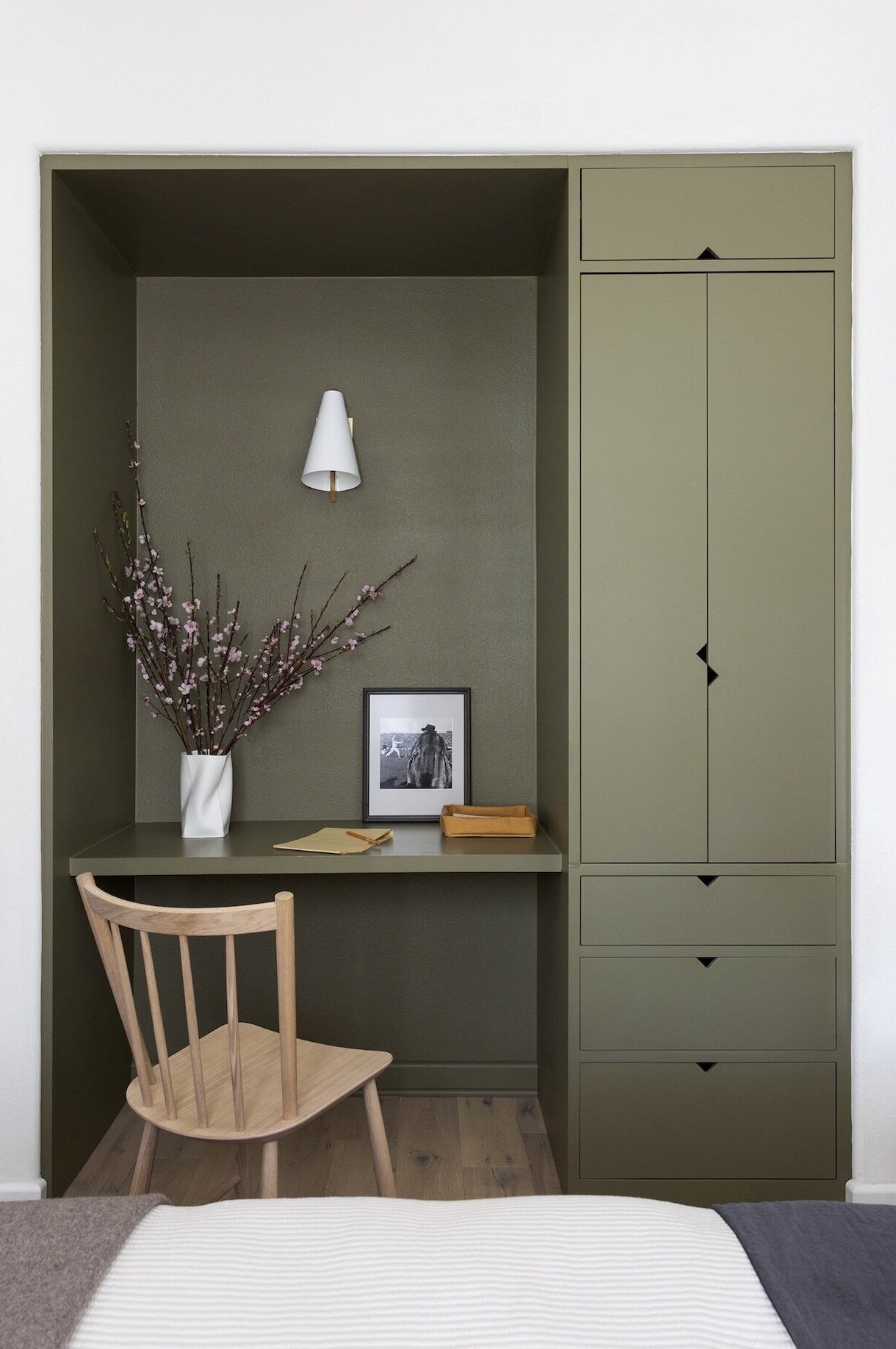
Some of the most consequential design decisions show up in spaces people pass through dozens of times a day.
In an entryway, a lack of a defined drop zone turns into keys on the counter, bags on the floor, and a daily reset that never quite happens.
We design a built-in bench with concealed storage, integrated hooks at the right height, and a durable surface for quick set-downs. That removes the friction immediately.
In a hallway, poor lighting and tight clearances create constant interruptions. We adjust fixture placement, widen key pinch points, and align door swings to change how easily people move through the home without adding square footage.
Powder rooms often default to minimal storage and delicate finishes that do not hold up. We specify a vanity with closed storage, a counter material that tolerates water and frequent cleaning, and fixtures that are easy to maintain. The space stays functional under daily use.
Transitional spaces between kitchen and living areas are another common failure point. Without defined zones, surfaces become catch-alls. We introduce a small service surface, integrated cabinetry, or a dedicated charging drawer to create a clear purpose and prevent clutter from spreading.
These are not headline features. They are where a home either supports or interrupts daily routines. We treat these areas as design-critical, not secondary, so movement through the home feels consistent and considered from one space to the next.
Bringing It All Together
Residential interior design should do more than look good. It should make life easier, more efficient, and more enjoyable.
By focusing on how you actually live, we create spaces that feel intuitive, grounded, and personal. The result is a home that reflects your style and actively supports your day-to-day life.
If your space looks good but does not work for you, it may be time to rethink the approach. Designing for real life is where lasting impact begins.

FAQ: Residential Interior Design That Works for Real Life
What is residential interior design?
Residential interior design focuses on creating functional, comfortable, and cohesive living spaces within private homes. We tailor every project to how our clients live, move, and experience their space.
How is residential interior design different from commercial design?
Residential design prioritizes lifestyle, personal preferences, and long-term comfort. Commercial spaces focus on regulations and high-traffic durability. We design residential interiors to feel intuitive and livable without sacrificing performance.
What types of residential projects do you work on?
Our projects range from full-home design and new construction to renovations and targeted updates for kitchens, living spaces, bedrooms, and common areas.
What is included in full-service residential interior design?
We follow a structured 5-step process that includes concept development, space planning, material and finish selection, custom furniture design, procurement, and installation coordination.
When should we be involved in a project?
Early involvement is ideal. Bringing us in at the beginning helps align budgets, timelines, and design decisions, especially for renovations and new construction.
How long does a residential interior design project take?
Timelines vary depending on scope and level of customization. Projects that include custom furniture or specialty materials may require additional time for fabrication and installation.
Do you handle procurement and purchasing?
Yes. Procurement is a core part of our process. We manage ordering, tracking, delivery, and installation coordination so everything arrives and is executed as planned.
Can you create custom furniture or built-ins?
Yes. We design custom furniture, built-ins, and tailored installations to fit specific spaces and align with the overall vision.
How are budgets managed?
We guide budgets through strategic planning, thoughtful material selection, and transparent coordination to ensure alignment with project goals.
What is your role during construction?
We collaborate with contractors, fabricators, and vendors to support design execution and ensure the final result matches the approved vision.
Do interior designers handle permits and code requirements?
We work alongside licensed professionals such as architects and contractors who manage permitting and code compliance.
How do you personalize residential interiors?
We tailor every project through layout, materials, color palettes, and custom elements that reflect how our clients live and use their space.
Is residential interior design only for large projects?
No. We also support smaller updates and space refreshes where thoughtful design can add meaningful long-term value.
