
How Interior Design Drives Revenue for San Diego Hospitality Spaces: Lessons from Our Favorite Projects
San Diego is one of the country's most dynamic hospitality markets. Coastal resorts, boutique hotels, destination dining, and community-driven venues all share one thing. They are built around experience-driven design.
What separates the properties that consistently perform from those that plateau is rarely the offering itself. It is how the space works.
Interior design shapes behavior at every touchpoint. It determines how guests arrive, where they pause, how they move, and how long they stay. Those behaviors drive revenue, from spend per visit to repeat engagement.
At Moniker Design Studio, hospitality is our through-line. We work across cafés, bars, restaurants, event venues, coworking hubs, and resorts throughout Southern California. We treat interior design as a business lever, not a finishing layer. Every decision supports the guest experience and the operational performance of the space. Here is how that approach translates into measurable impact.
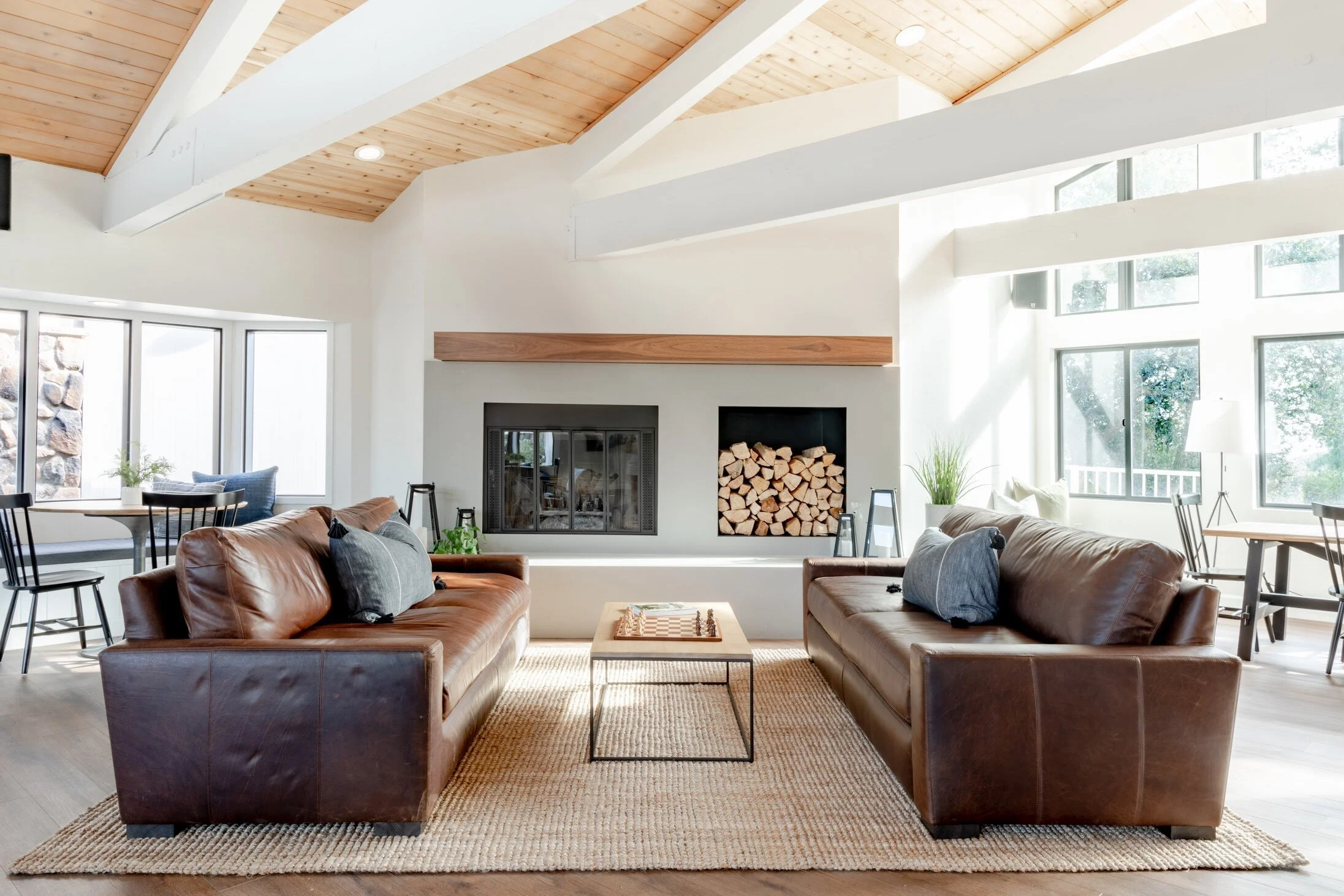
Designing for Dwell Time Across Restaurants, Cafés, and Hotel Lobbies
In Southern California, indoor and outdoor living blur. Guests expect spaces to flex with the day. That makes dwell time one of the most important drivers of revenue. The longer a guest chooses to stay, the more opportunities the space has to generate revenue.
Comfortable seating, natural light, and intentional spacing encourage guests to settle in. In a restaurant, that means an additional course or round of drinks. In a hotel, it means:
Guests purchasing food and beverage from the lobby café or bar
Increased usage of on-site amenities throughout the day
A stronger perception of the property's overall value
In a smaller footprint, the same logic applies. For Copa Vida, a coffee shop in San Diego's Sorrento Valley, we handled the furniture design. That is the layer guests are in most direct contact with throughout a visit. In a café, that work shapes whether someone grabs a coffee and goes or settles in to stay. That is the difference between a single transaction and an extended one.
The Oaks Resort, set in the hills outside San Diego, shows this principle at scale. We did not design purely for overnight stays. We built the interiors to support leadership conferences, company retreats, and extended on-site engagement. Residential-style rooms, a coffee-shop-inspired communal dining space, and custom millwork and furnishings by our sister fabrication company Moniker Building Co. create an environment where guests naturally gather, linger, and interact.
The result is a property that blends rustic surroundings with a more elevated, modern experience. Materials are layered to bridge the two. Neutral foundations, custom furnishings, and warm textures feel familiar but considered. Guests experience comfort and a sense of intention from the rooms through the shared spaces. Usage increases across the property, from dining to gathering areas. The resort becomes a destination rather than just accommodation.
Layouts That Support Flow in High-Traffic Hospitality Environments
If dwell time determines how long guests stay, flow determines how many can move through a space without friction. In a Southern California market that swings between locals on weekday mornings and tourists at peak-season weekends, that capacity matters.
A restaurant needs to move guests efficiently from entry to ordering to seating. A hotel lobby has to handle check-in traffic, luggage movement, seating, and often food and beverage service all at once. Strategic zoning makes this possible. Clear pathways guide guests from one moment to the next without confusion. The result is a space that handles volume while still feeling curated and calm.
From a revenue perspective, this matters because:
Faster, smoother ordering increases throughput during peak hours
Reduced friction leads to higher conversion at the counter
Multiple zones create additional opportunities for spending
A well-designed layout lets a business serve more customers in the same footprint. That is one of the most direct ways to increase revenue.
Designing for Community Creates Repeat Customers
Flow brings guests in. Community brings them back. In a city like San Diego, neighborhood loyalty runs deep. Locals choose where to spend their time as carefully as they choose where to visit. The most valuable hospitality spaces are the ones people return to.
Research published in the International Journal of Hospitality Management describes the "servicescape" as the full physical environment of a service business, including interior design, ambient conditions, and tangible details. The study found that this environment is a meaningful predictor of perceived service quality and a driver of repeat patronage in restaurants.
Across our projects, from cafés to resorts, we design community into the space rather than treat it as an afterthought. When an environment encourages connection, it becomes:
A destination in itself, not just a stop along the way
A preferred meeting place for regulars and groups
A repeat experience for guests and locals alike
That translates into higher customer lifetime value, stronger brand affinity, and more consistent traffic over time. Our work on Moniker General, a coffee shop and event space in Point Loma, was built around exactly that goal. The space functions as a community hub, designed to welcome a wide range of guests throughout the day. In a competitive Southern California market, that kind of retention is often the difference between a space that opens strong and one that stays full for years.
Materiality and Detail Define Perceived Value in Hospitality
Perception in hospitality is formed long before a guest tastes the food, checks into a room, or interacts with staff. Interior design sets expectations immediately. Materiality is one of the most powerful tools we have to shape that perception.
Every surface, finish, and detail communicates something about the brand. The weight of a door handle. The texture of a tabletop. The warmth of wood against stone. The softness of layered textiles. These are not decorative decisions. They are signals of quality, intention, and value.
Research published in the International Journal of Hospitality Management on hotel lobby design and booking intentions reinforces this. Customers tend to perceive thoughtfully designed hospitality interiors as more luxurious and are willing to pay higher prices for the experience.
We approach materiality as a system rather than a collection of individual choices. Neutral foundations are layered with contrast, texture, and custom elements to create depth without overwhelming the space. The goal is environments that feel refined and cohesive from every angle, whether the project is a coastal restaurant, an urban café, or a hillside resort.
This balance is critical. When materials feel too utilitarian, the experience reads as transactional. When they feel overly precious or disconnected, the space becomes inaccessible. The right material strategy creates alignment between brand, environment, and guest expectation.
This directly impacts pricing power and guest behavior. Spaces that feel considered and cohesive justify higher price points with less resistance. They build trust before a transaction even happens and reinforce that trust throughout the experience. Durable, well-chosen finishes also hold their appearance over time. That protects the brand experience and reduces the need for frequent updates or repairs.

Custom Design Moments Turn Hospitality Spaces Into Marketing Channels
Custom design moments are where a space becomes recognizable. They are the points where brand, materiality, and layout come together to create something memorable. Intentional touchpoints that reinforce identity and encourage engagement.
In our projects, these moments often take the form of integrated millwork, custom furniture, layered material transitions, and focal design elements embedded in the architecture of the space. The goal is not to decorate. The goal is to create cohesion and recognition across every interaction. Full Circle Tattoo in University Heights is one example of how a hospitality-style approach to a non-traditional space creates that kind of recognition.
From a performance perspective, custom design moments contribute to:
Increased social sharing and organic visibility
Stronger brand recognition across locations and platforms
Higher recall, leading to repeat visits and word-of-mouth growth
Clear differentiation in a saturated Southern California hospitality market
In restaurant and café environments, this might show up as a signature service counter, a distinct material palette, or a spatial feature that anchors the room. In hotels and resorts, it often extends into lobbies, lounges, and communal areas that double as both guest amenities and brand statements.
The most effective spaces do not rely on a single Instagram moment. They are built around a series of intentional details that create a consistent, recognizable experience from entry to exit. Done well, the space itself becomes a marketing asset. One that continues to generate awareness and engagement long after the visit ends.
The Bottom Line: Hospitality Design Is a Revenue Strategy
Hospitality interior design is often viewed as a creative exercise. In reality, it is a business decision with measurable impact. Across restaurants, cafés, hotels, and event-driven spaces in San Diego and beyond, the principles remain the same:
Interior design influences behavior
Behavior drives spending
Experience drives retention
The most successful hospitality environments are designed with intention at every level. That is how design becomes more than aesthetic. That is how it drives revenue.
If you are planning a hospitality project in Southern California, reach out to our team to start the conversation. You can also learn more about our 5-step process and how we guide every project from discovery through final install.
FAQs: Hospitality Interior Design and Revenue
How does interior design impact hotel revenue? Interior design influences how guests perceive value, how they use shared spaces, and whether they spend on on-site amenities like food, beverage, and events.
Why are hotel lobbies so important in modern hospitality design? Lobbies have evolved into social and revenue-generating spaces. A well-designed lobby encourages guests to stay, work, meet, and spend more time and money on property.
What design features increase revenue across hospitality spaces? Comfortable seating, efficient layouts, strong lighting, and clear flow all contribute to higher dwell time, better conversion, and repeat visits.
How does interior design impact customer retention? Spaces that create memorable and comfortable experiences build emotional connections, which leads to repeat visits and higher lifetime value.
Is high-end interior design worth the investment for hospitality brands? Yes. Strategic design supports premium pricing, improves operational efficiency, and enhances overall guest experience. All of which contribute to long-term revenue growth.
